
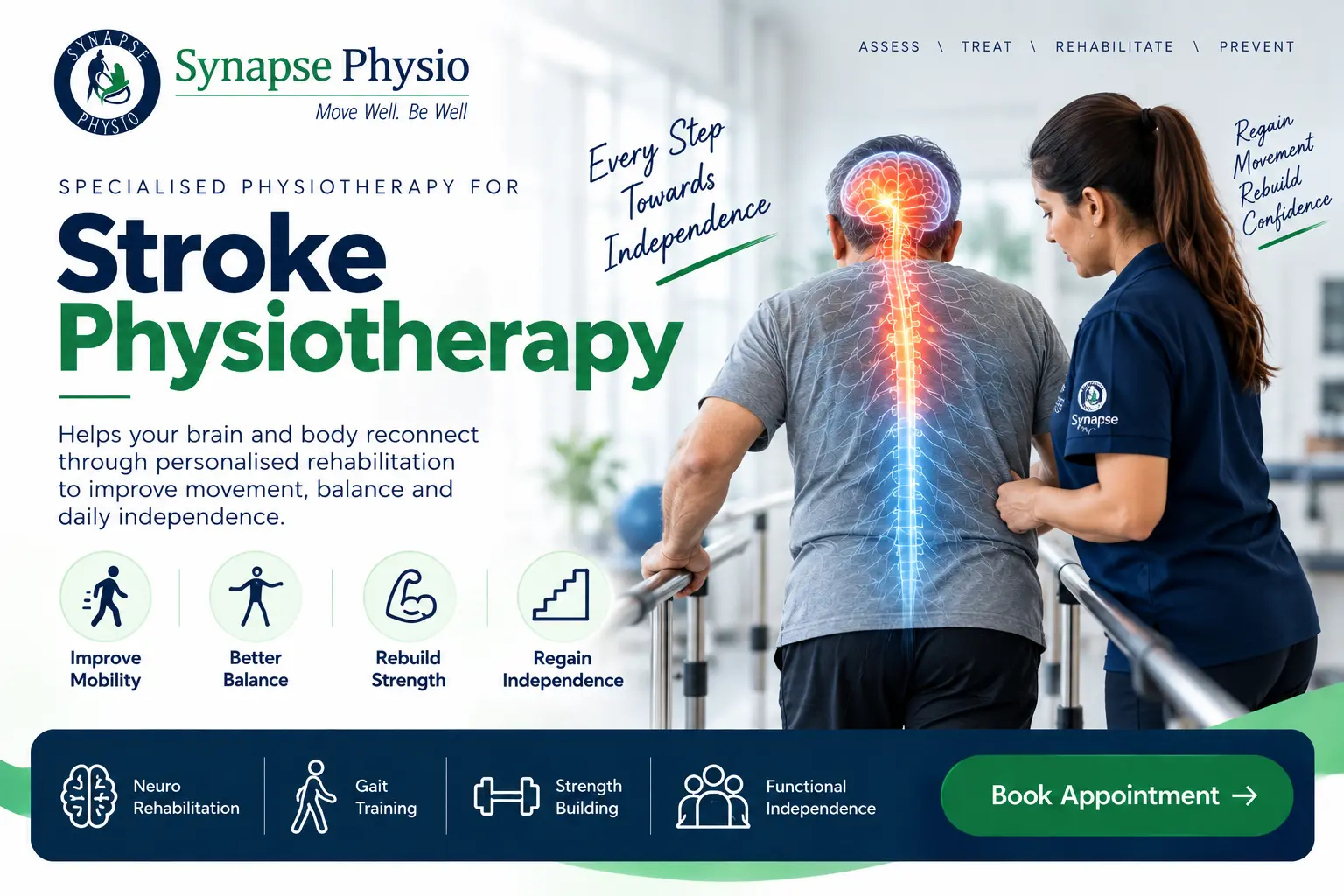
Understanding Stroke Physiotherapy
A stroke can affect the brain’s ability to control movement, balance and coordination, often leading to weakness, stiffness or difficulty walking. The good news is… the brain has an incredible ability to adapt, a process known as neuroplasticity. Through Stroke Rehabilitation Physiotherapy, we help retrain movement, improve daily function and restore confidence. Our Stroke Physiotherapy approach focuses on helping you regain independence, one step at a time.
Do these sound familiar?
- Weakness or reduced movement on one side of the body
- Poor balance and difficulty with coordination
- Reduced control or strength in the arm and hand
- Muscle stiffness or spasticity affecting movement
- Difficulty walking or changes in your walking pattern
- Fatigue during everyday activities or simple movements
How Stroke Physiotherapy Helps
Neuro-Rehabilitation
Task-specific exercises encourage the brain to relearn movement and improve everyday function through neuroplasticity.
Gait Retraining
Guided walking practice helps improve balance, confidence and safer movement during daily activities.
Balance & Coordination
Targeted Stroke Rehabilitation Physiotherapy improves stability, coordination and overall movement control.
Strength & Functional Recovery
Progressive exercises rebuild strength on the affected side, making daily tasks easier and more independent.
What to Expect During Stroke Physiotherapy
Detailed Assessment
We assess your strength, balance, walking pattern and daily function to understand your recovery needs.
Personalised Rehabilitation Plan
Your Stroke Rehabilitation Treatment is tailored around your goals, lifestyle and stage of recovery.
Guided Therapy Sessions
Focused exercises and hands-on techniques help improve movement, confidence and everyday function.
Walking & Balance Training
Practice walking, balance and coordination to support safer, more independent mobility.
Home Exercise Programme
Simple physiotherapy after stroke exercises and guidance help you continue progressing between visits.